A Call for Slower Creativity
I have conducted many design processes on speed. I even have a super-accelerated format that takes just 1.5 hours from problem to prototype, on the shelves.
However, a recent session with a client made me reconsider whether the era of rapid sprints for generating good ideas is coming to an end.
The Design Sprint method originates from Silicon Valley, where the focus is often on quickly generating, scaling, and monetizing good ideas. Creative processes that naturally break with conventional ways of thinking and acting risk questioning efficiency – particular if they are released from their sprint cage. The sprint cage isolates the problem and thus the solution, which has been useful in the past, but few organizations operate under the Silicon Valley model anymore. Therefore, we should also rethink our approach to creativity and ideation.
Complexity requires our collective creativity
Today’s work rarely involves solving isolated problems. Instead, we navigate daily through complex systems with many actors and changing needs. This requires resilience, adaptability, and a high degree of continuous ability to adjust solutions and activate collective creativity in our organizations and teams.
The value of slowness
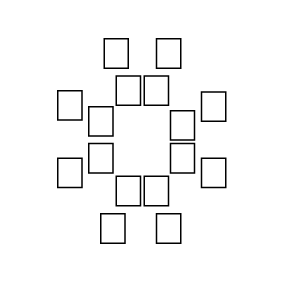
One participant in a recent workshop I conducted reflected at the end of the day on how the slowness in brainstorming had given her a new perspective on ideation. She actually wished to slow down even more and have the Brainstorm Sudoku hanging in the office over several days, perhaps as a permanent element, so people could continuously add ideas to it and find inspiration.
Ironically, this is the way I work best myself – by having a brainstorm hanging for weeks, sometimes months, that I return to intermittently. However, when I train others in creativity, it is often through high-paced workshops.
Maybe it is time to challenge the one-sided focus on accelerated creative processes? Instead, we should practice, both as organizations, teams, and individuals, integrating a creative spirit into our daily work and allowing creativity to unfold spontaneously.
My three steps proposal for supporting a slower and more integrated approach to creativity
- Create a shared and simple language for creative processes: Introduce divergent (creating possibilities) and convergent (making decisions) thinking, as popularized by The British Design Council with their double diamond model. Ensure that all employees understand and have experience with this way of thinking.
- Choose a few, flexible tools: Use a few simple and generic tools that can be adapted to different contexts and time frames. Train the use of them and explore how many contexts they can be applied to, in both short and long meetings, physically and digitally, together and alone etc.
(See below for inspiration) - Allow everyone to contribute in their own way: The accessibility of processes must be broad and diverse. The approach to creativity is individual, and we must create space for each person to contribute in the way that suits them best. Understand each other’s preferences and support psychological safety in the team by inviting everyone to become aware of their personal preferences and share them with each other.
The result is more than just a boost in creativity
These three steps naturally overlap and must be repeated continuously to create lasting cultural change. When individuals and collective needs become clear, the shared language for creativity and problem-solving becomes more nuanced, and the specific needs for tools and processes become clearer. If you work purposefully on this for a year, creativity, well-being, and psychological safety will undoubtedly increase significantly. After three years, it will be a natural part of the organization’s culture.
SHARE "A Call for Slower Creativity" with a friend:
Maybe this would also be interesting for you?

When the most important thing in a workshop is not meant to be shared
Change is not anchored in collective decisions alone, but in the tension between the personal, the group, and the shared space.
When the most important thing in a workshop is not meant to be shared
Winter Meditation – When the World Calls for Stillness
A guided visualization to turn inward, find calm, and make space for new beginnings – inspired by the wisdom of winter.
Winter Meditation – When the World Calls for Stillness