

This exercise is a reflection tool that can be used when you are in a transition.
It may be at the turn of the year. But it can just as well be in the middle of the year, at the end of a project, at the beginning of something new – or when something old no longer quite fits.
The exercise helps you look both back and forward at the same time. Not to reach quick conclusions, but to create an overview that holds experience, direction, and what has not yet taken form.
Rather than forcing answers, the exercise works with images, circles, and rhythms. It activates not only thinking, but also sensing and intuition – as a complement to analysis and planning.
The exercise is inspired by DesignWISE and works with the cycle of the year – winter, spring, summer, and autumn – both as seasons and as mental states.
When does this exercise make particular sense?
The exercise is well suited when you:
- are in a transition between the old and the new
- need to gather experience before taking the next step
- want to reflect on direction without forcing decisions
- want to work with life and working life as a coherent whole
It can be used individually, in leadership settings, in teams, and in strategic processes.
Understanding the exercise
The exercise consists of two circles with images.
–> The first circle represents what has been.
–> The second circle represents what is on its way.
The images function as associative mirrors:
They do not provide answers, but openings.
By working with images rather than words alone, the exercise activates what often lies beneath our need to understand and explain everything logically: sensations, moods, and inner movements that can otherwise be difficult to access.
Which image cards can you use?
I use Marina Abramović’s method cards, originally developed to activate artistic creativity. I only use the images on one side of the cards.
You can use any type of image cards or images, as long as they:
- are not too literal
- are ambiguous and rich in symbolism
- are selected randomly, allowing you to be surprised
What matters is not the cards themselves, but the openness of the images.
How to do it
Step 1 – First circle: What has been
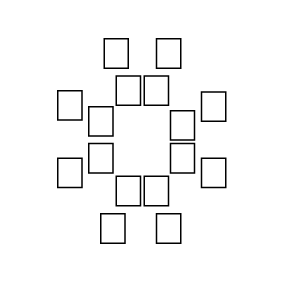
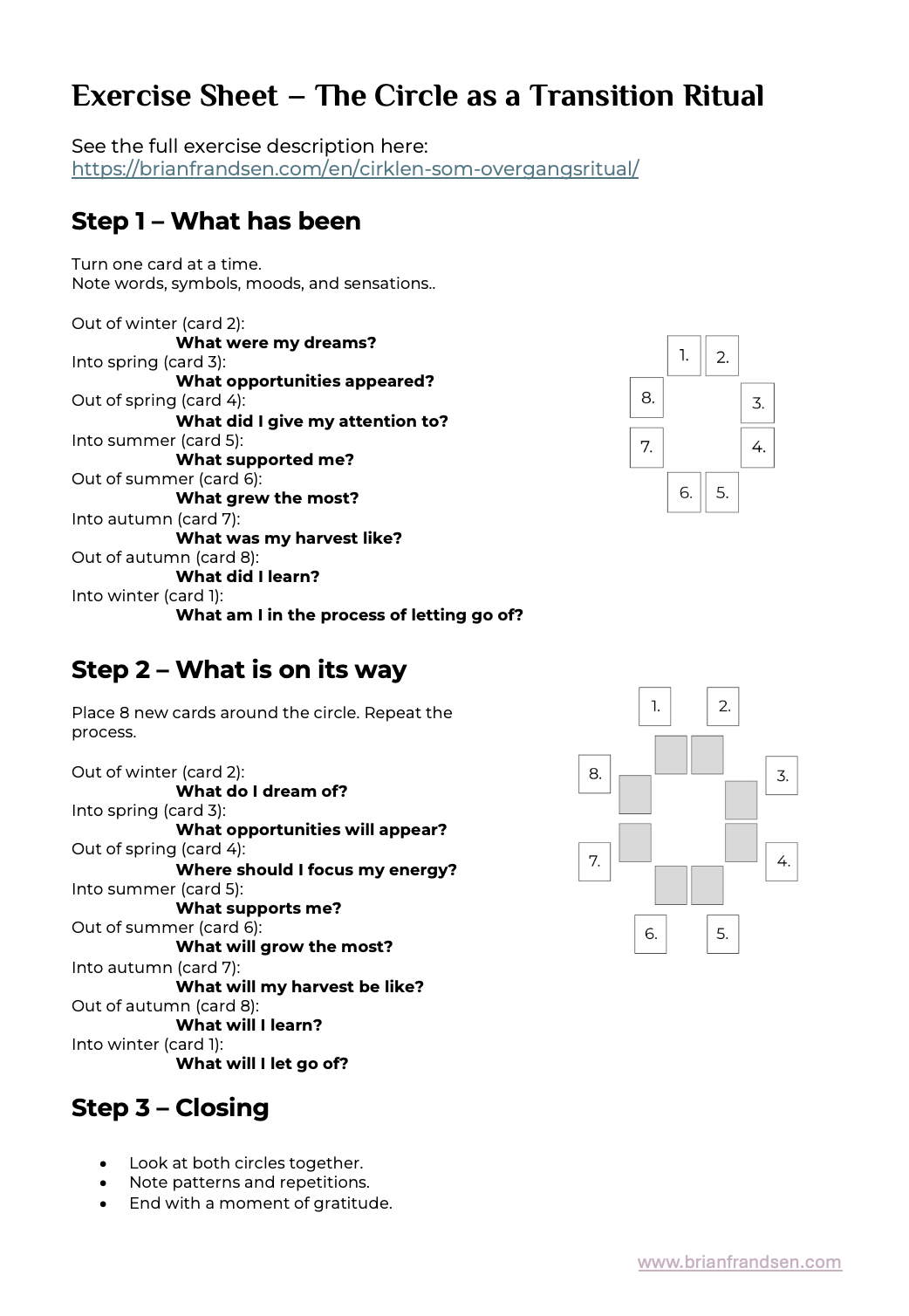
Place 8 image cards face down in a circle, as shown in the illustration below.
The circle represents a complete process – a year, a project, or a period.
Turn the cards one at a time.
For each card:
- Look at the image
- Note everything you notice
(words, symbols, sensations, moods, feelings) - Ask yourself what the image might say about the question

The questions are:
Card 2 – Out of winter: What were my dreams?
Card 3 – Into spring: What opportunities appeared?
Card 4 – Out of spring: What did I give particular attention to?
Card 5 – Into summer: What helped and supported me?
Card 6 – Out of summer: What grew the most?
Card 7 – Into autumn: What was my harvest like?
Card 8 – Out of autumn: What did I learn?
Card 1 – Into winter: What am I in the process of letting go of?
Step 2 – Second circle: What is on its way
Place 8 new image cards around the first circle – again face down.
Repeat the exercise with a focus on what is to come.

The questions are:
Card 2 – Out of winter: What do I dream of?
Card 3 – Into spring: What opportunities will appear?
Card 4 – Out of spring: Where should I focus my energy?
Card 5 – Into summer: What helps and supports me?
Card 6 – Out of summer: What will grow the most?
Card 7 – Into autumn: What will my harvest be like?
Card 8 – Out of autumn: What will I learn?
Card 1 – Into winter: What will I let go of?
Step 3 – Closing
When both circles have been completed, take a step back.
Look at the whole.
–> Are there patterns, repetitions, or movements that stand out?
Before putting the circles away, take a moment to feel gratitude – both for what has been and for what is on its way.
The exercise has already left its mark.
You do not need to do anything more now.
Example from practice: When insight gives permission
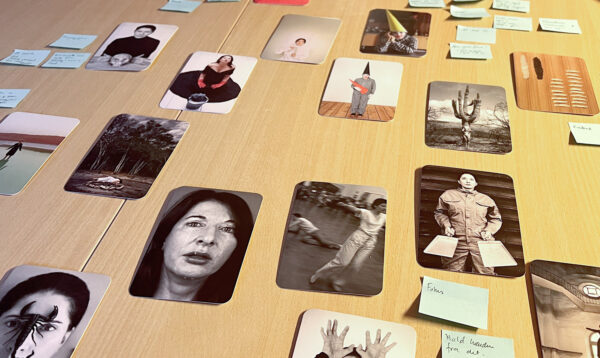
When I used the exercise myself at the transition into a new year, I entered the process with the expectations I often have of myself: to develop, to move forward, and to reach new goals.
But across the cards in the second circle, a different pattern began to emerge. The story was not about acceleration or big leaps, but about consolidation.
–> Finding the core.
–> Gathering the threads.
–> Taking a small step instead of a big one.
That interpretation gave me something important: an inner permission to slow down.
Throughout the year, that insight has served as a quiet guiding principle. It made it easier to dwell on things, work with greater focus, and set smaller, more precise goals – without the feeling of falling behind.
Not because the images told the truth.
But because they gave access to something I already knew, but had not yet allowed space.
How the exercise can be used in an organisation
The circle can be used individually, but it can also function as a shared reflection space in teams and organisations. When the exercise is used collectively, participants first work individually with the images and then, once the entire circle has been completed (first circle 1, then circle 2), each participant shares their overall experience by starting with the sentence:
“What the images as a whole tell me is…”
Conclude the exercise with a shared conversation, for example based on these questions:
–> What are we in the process of letting go of to make space for something new?
–> What do we need to learn more about in the coming period?
The exercise does not require agreement.
It requires attention and curiosity.
Next steps
The circle can serve as a starting point for more concrete reflection and development processes.
Many people choose to continue working with:
- Personal Leadership Canvas
– to translate insights into personal direction and responsibility - 5-step storyboard
– to work with narrative, prototyping, and next steps
In this way, the circle does not become an ending, but a place to begin.
Other tools and methods:
 Method -
The four-leaf clover of change
To create change in your life, you need to tap into both conscious and unconscious skills and knowledge. Use this coaching tool on your own challenge or help a colleague, friend or similar to uncover and fulfill their potential.
The four-leaf clover of change
Method -


