
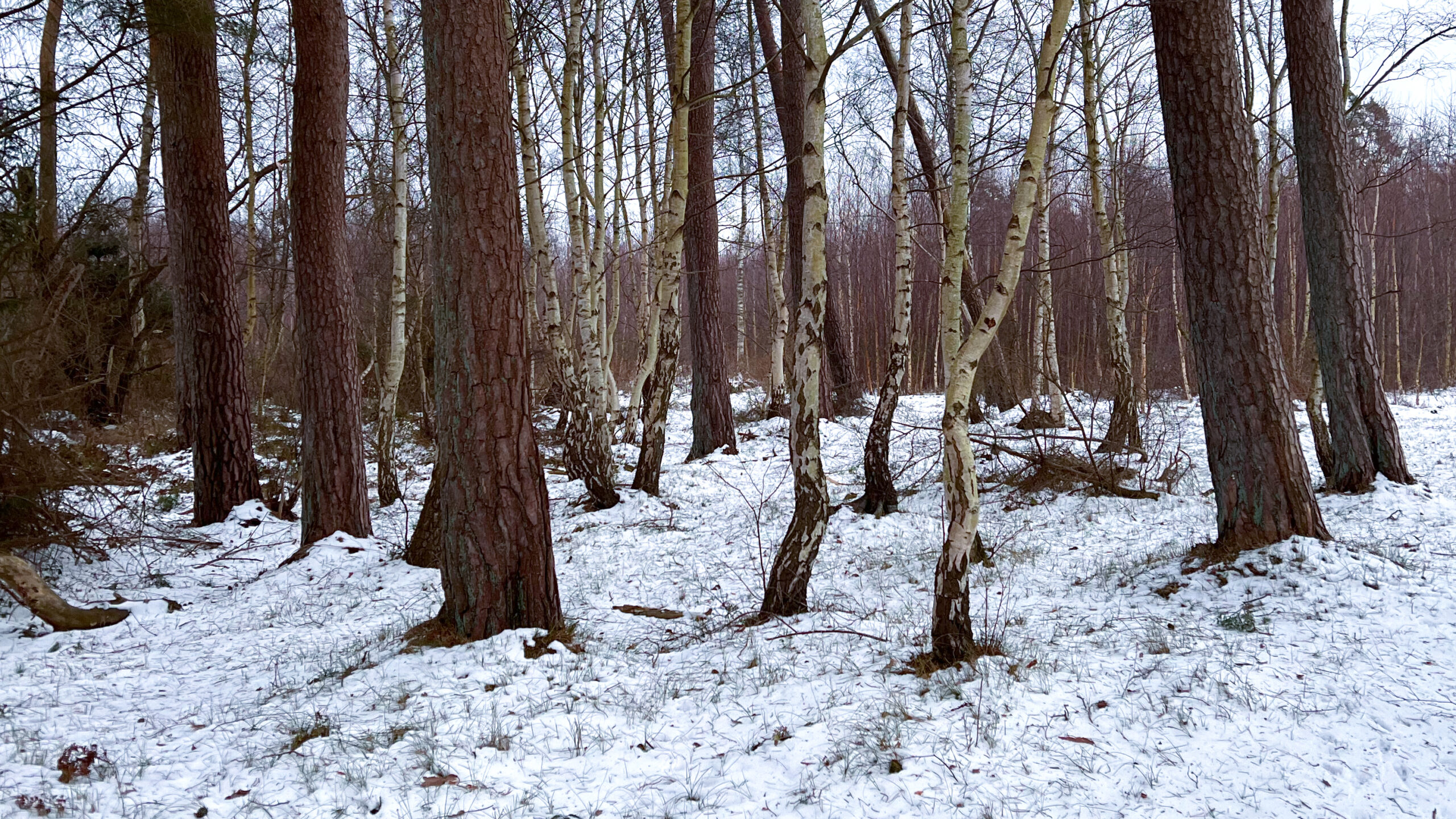

Many of us live without truly making space for winter. We move from activity to activity, from task to task – even when our energy is depleted and our bodies are calling for stillness. But just as no one can live in endless summer, no one can do without winter. Not humans. Not nature. Winter is the time when life turns inward, when the pace slows, and when what is yet to come is allowed to take shape in silence. Without winter, no renewal. Without hibernation, no new beginning.
A memory of winter, a memory of stillness
When I need to find my way into winter’s calm, I often return to a particular memory from my childhood.
I am lying in the middle of a small lake on my family’s land. The lake is frozen solid. I’m wearing a snowsuit – I’m probably around ten years old. Somewhere out there in the landscape, my father is walking, but I can neither see nor hear him. The sun is setting, colouring the snow-covered, flat heathland in reddish and golden hues. It almost feels as if I can watch the light slowly disappearing.
It is completely quiet.
The only sound I can hear is the soft crackling of the polyester in my snowsuit rubbing against the frozen snow and the cold ice whenever I move even slightly. I try to lie completely still – and realise that with stillness comes calm. What makes noise is me. Everything else in the landscape has already come to rest.
The sound-dampening quality of the snow helps, but this is also simply winter. The animals and plants have long since found shelter. They have retreated to places where they can keep warm and use as little energy as possible – because instinctively they know that spring will return.
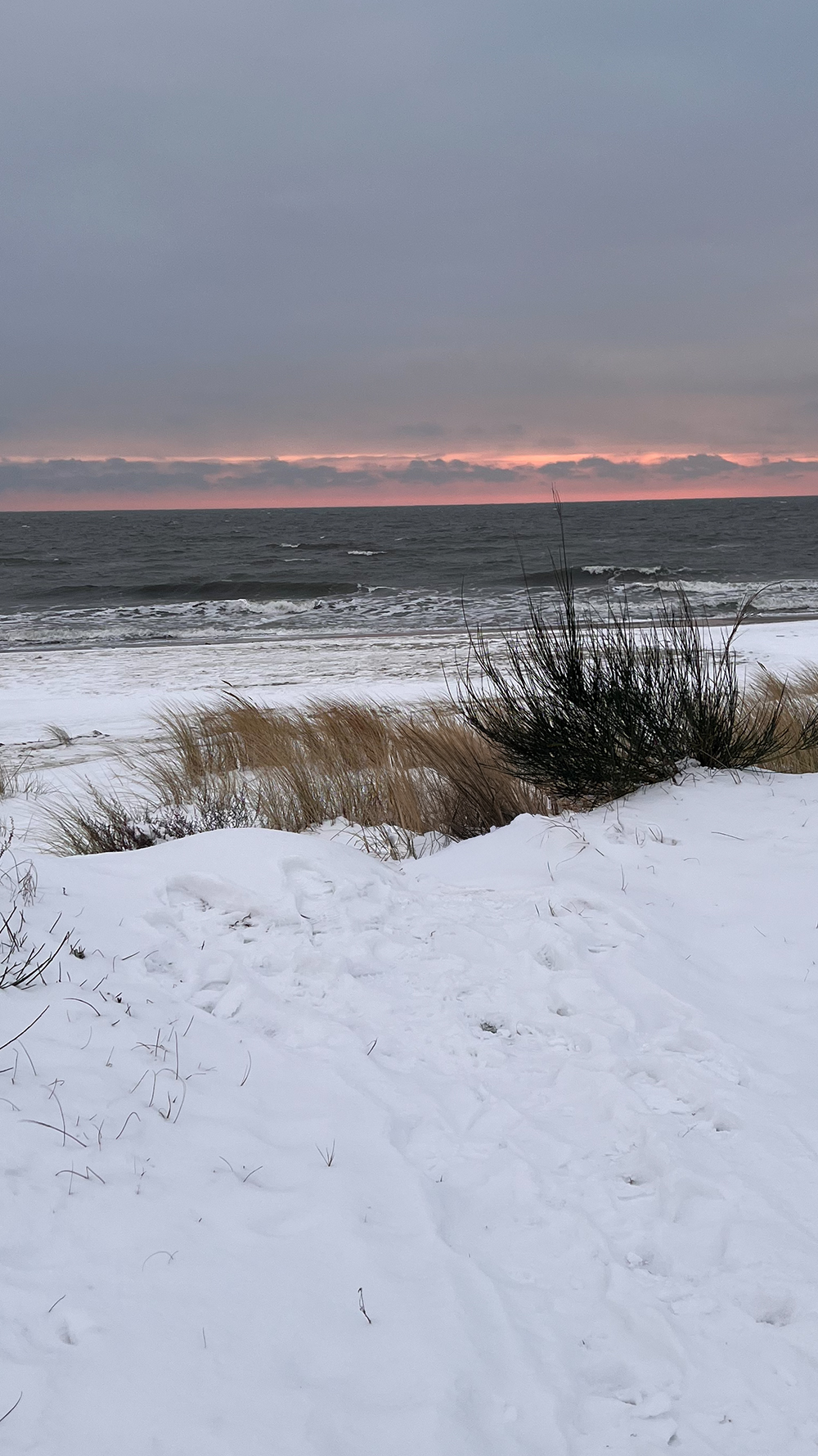
Completely still – and yet most alive
The emptiness I feel here is one of the best sensations I know. It is both fleeting and endless at the same time. It feels as though I am at the core. Here, where I feel most alive – and at the same time most still. Here, where I feel deeply connected – and yet completely insignificant.
This is not the kind of smallness one experiences in the mountains or by the sea. This feeling turns inward. As if I am small in relation to myself. As if my “self” is just a tiny point within this body, this lake, this landscape where I am lying.
Winter does something to us. It draws us away from explanations, ambitions, and self-consciousness. It allows us to let go – not to disappear, but to become more precise. More grounded. More ourselves.
Winter is not a pause, but a prerequisite
In our culture, winter is often mistaken for stagnation. For absence. For something to be endured quickly so we can move on. But winter is not a flaw in the system. It is the very condition that allows the system to function.
Winter is where we recalibrate. Where we recharge. Where our awareness becomes capable, once again, of holding the inherent friction that always exists – between me and others, between me and the world, and between me and my own thoughts, feelings, and body.
Seen this way, winter is not passive. It is deeply active – just in a different way than spring, summer, and autumn. It works in depth. In secrecy. In what has not yet taken form.
The tension between activity and stillness
Much of what I work with – both personally and professionally – revolves around the ability to stand in tension. To hold multiple states at once without immediately trying to resolve them.
Winter represents one pole of this tension: stillness, inwardness, slowness. The other seasons represent action, movement, relationship, and creation. The problem arises when we attempt to live exclusively at one end.
We cannot exist in constant activity. But neither can we remain in winter forever. The art – and the maturity – lies in moving between states. In sensing when it is time to withdraw, and when it is time to step forward again.
Winter teaches us that stillness is not a rejection of life – but part of it.
The small winters of everyday life
Most people know the experience of staring into space – without staring at anything in particular. The gaze becomes unfocused. Thoughts loosen their grip. A moment feels longer than it actually is. When we “snap out” of it again, we often feel slightly disoriented. As if we need a moment to find ourselves.
These moments are small glimpses of winter.
They rarely arise intentionally, but they are not random. They express a deep instinct: the need to hibernate. Just as animals and plants do when autumn turns into winter – without panic, without fear that spring will not return.
Because it always does.
A practice for turning inward
The Winter Meditation was created as a way to help access this state. Not as an escape from the world, but as a way of becoming more capable of being in it.
You can use the meditation when you need to reset. When the pace has been high. When you feel overstimulated. Or when you are standing on the threshold of something new and need to give it space before it takes shape.
The meditation invites you to turn inward, let go, and bring attention to what is still only present as a quiet sensation – dreams, longings, beginnings.
Winter is not the absence of life.
It is life in its inward-facing phase.
After the harvest comes stillness
If the Autumn Meditation is about harvest, ripening, and gathering experience, then the Winter Meditation is about letting everything settle. About allowing experiences to sink into the body and awareness, without having to do anything with them yet.
The seasonal meditations arise from the same underlying understanding: that we – like nature – move in cycles, and that good decisions, sustainable change, and meaningful action require respect for every phase of that cycle.
This is also a central premise in DesignWISE, where the shifting seasons are used as a language for processes, decisions, and human states. Not to romanticize nature, but to remind us of something we already know – and often forget:
We cannot skip winter.
Other meditations:
Autumn Meditation – On Harvesting, Letting Go, and Finding Calm
A guided meditation to slow down, find calm, and reconnect with your inner rhythm – like the quiet wisdom of autumn itself.
Autumn Meditation – On Harvesting, Letting Go, and Finding Calm
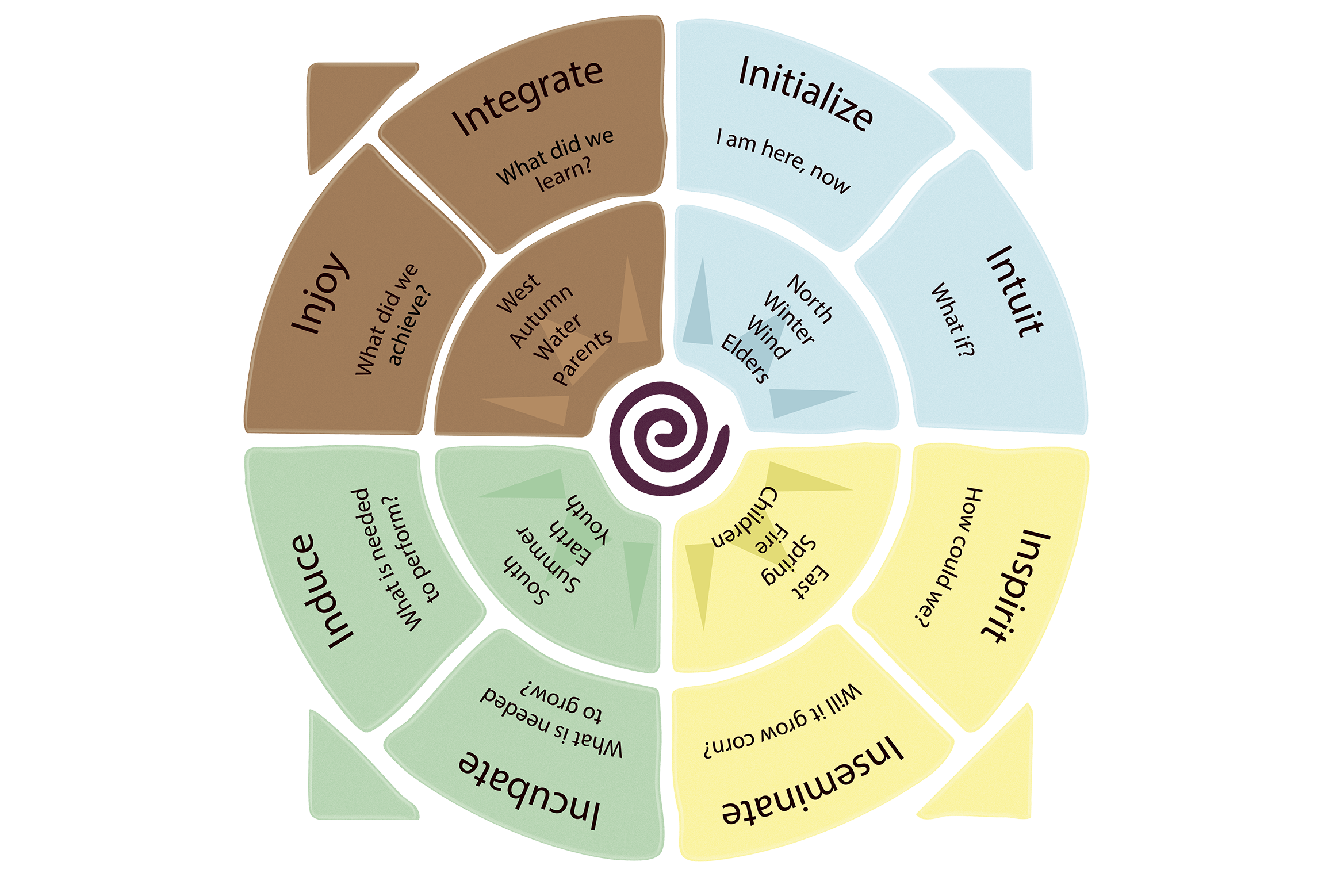
DesignWISE — Introduction Meditation
Experience the DesignWISE introduction meditation — a 13-minute guided journey to realign your inner compass and explore your next step.
DesignWISE — Introduction Meditation


