
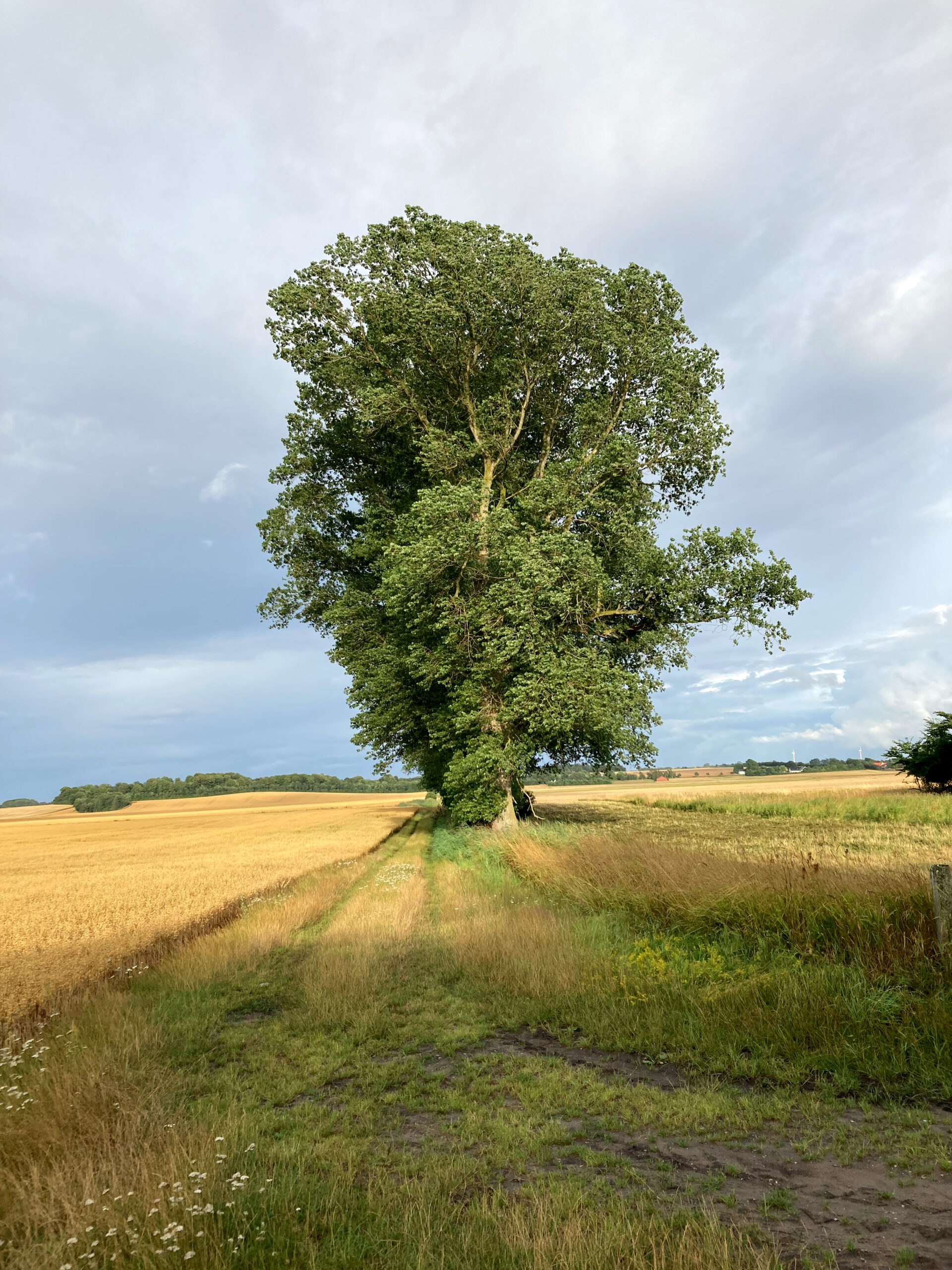

Most of us associate summer with taking time off. With holidays, long evenings, cold drinks and, hopefully, a little less work.
But summer hasn’t always looked like that.
In a life much more closely connected to the rhythm of the year, summer was also a time for work. This was when the land needed tending, crops needed the right conditions, and everything that had begun to sprout in spring needed the time and care to grow strong enough to be harvested later.
Summer was full of energy, growth and work. And perhaps it can tell us something about a human state that we have become very good at – and, at the same time, surprisingly bad at.
When it’s time to do
As a state, summer is the part of a process where we act.
Something already has a direction. We have explored the possibilities, been curious and chosen what we want to give our attention to. Now it needs energy, time and persistence if it is actually going to become something.
This is where we grow, create, build, write and do. We put our heads down and get on with it.
At its best, the summer state resembles what psychologist Mihaly Csikszentmihalyi described as flow: the state in which we become so absorbed in what we are doing that time almost disappears. The work moves forward, our attention gathers, and one movement naturally leads to the next.
I love that state.
There is something deeply satisfying about putting deliberation aside for a while and giving yourself fully to the work. Knowing roughly where you are heading and feeling your energy gather around the movement towards it.
Rhythm, focus and persistence. And, every now and then, a little sweat on your brow.
The eternal summer
The strange thing, of course, is that summer as a season has almost become the opposite in our modern lives.
This is when we take time off.
And perhaps we haven’t so much swapped summer and winter as stretched the summer state across the rest of the year – apart from those few weeks in the middle of summer when we finally stop.
When I facilitate processes and use the seasons as images for different human states – rest, curiosity, action and reflection – there is one thing I hear again and again:
Many people feel as if they are almost always in summer.
There is always something to produce, deliver, answer, develop and execute. Preferably quickly, and preferably several things at once.
And then we take a holiday. Only to start all over again afterwards.
The problem is that, as part of nature ourselves, we are not made for eternal summer. Summer is a state we move into – and out of again.
When action loses its direction
When we are constantly acting, we gradually lose touch with what it is we are actually acting on.
In my work, spring is the state in which we explore, stay curious and allow new possibilities to emerge. At some point, we choose what deserves our attention and energy. That choice is what makes the good summer state possible.
Without it, we risk becoming incredibly active without necessarily going anywhere. We react to whatever appears next, shift our focus and try to keep several things moving at once.
Perhaps some of the exhaustion so many people experience is therefore not only a question of too much work, but also of too little direction and meaning in the work we spend our energy on.
We have become bad at summer
This creates a paradox that I find quite interesting. Because when we try to stay in summer all the time, we actually become worse at truly being in summer.
We procrastinate, switch between tasks, check our email and move on to the next thing. We try to multitask, lose focus, find it again and lose it again a little later. In this way, we can be incredibly active without ever experiencing the focused momentum that I associate with summer.
The pure summer state is different. Here, the direction has already been chosen, which means our attention can gather around what we have decided to give our energy to. We keep working and stay with the movement long enough for a rhythm to gradually emerge. One action leads to the next, and on good days it can almost feel as though the work begins to carry itself.
That is the experience the summer meditation works with. The water begins as a tiny stream that gradually gathers, finds its way through the landscape and becomes a steady current. Only after following the current for some time do you lift your gaze and discover that something has grown around it.
Perhaps that is exactly what summer can teach us: that something only truly gets the chance to grow when we give it our attention for long enough.
The meditation comes with a small warning
For that reason, this meditation also comes with a small warning. It is not intended as a hack for squeezing even more productivity out of an already exhausted body.
If your body and mind are calling for rest, perhaps winter is what you need. And if you have lost your sense of direction and no longer know what your energy should be used for, perhaps you need spring. The summer meditation is for those moments when the direction has already been chosen and something deserves your attention and energy.
In that sense, the meditation is an attempt to practise being a little more fully in summer. To give yourself to the movement, stay with it and experience the rhythm that can arise when, for a while, you gather your attention around one direction.
Summers when something takes shape
I write all of this knowing perfectly well that I struggle with exactly the same thing. I also have an unfortunate tendency to simply keep working, day after day, week after week, month after month. Until the calendar says July, I close my laptop and discover that my body hasn’t quite got the message.
And there you are on the first day of your holiday, drink in hand, with a nervous system that still thinks it has a deadline to meet.
Over the past few years, I have therefore been experimenting a little with my idea of the summer holiday. Rather than seeing it only as the time when I am supposed to stop doing things, I have started asking myself, already during spring, what I might actually like to use the energy of summer for.
It might be a work project I want to realise, something at home I would like to build or repair, something I want to learn, or something else entirely. The point is not to create yet another list of things I need to get done during my holiday, but to choose something contained that I genuinely want to give myself to.
In this way, I am trying to create a small parallel track alongside the rhythm my working life has otherwise taught me. Because summer is also the time of year when I personally feel an enormous amount of energy. The days are long, there are fewer distractions, and both my body and mind often want to do something.
Let summer be summer
When I started thinking about my best summer memories, I was actually a little surprised. Of course, images of pure relaxation come to mind: drinks at sunset, quiet days by the water and the feeling of having nowhere to be. But some of the summer memories I value most are actually about work.
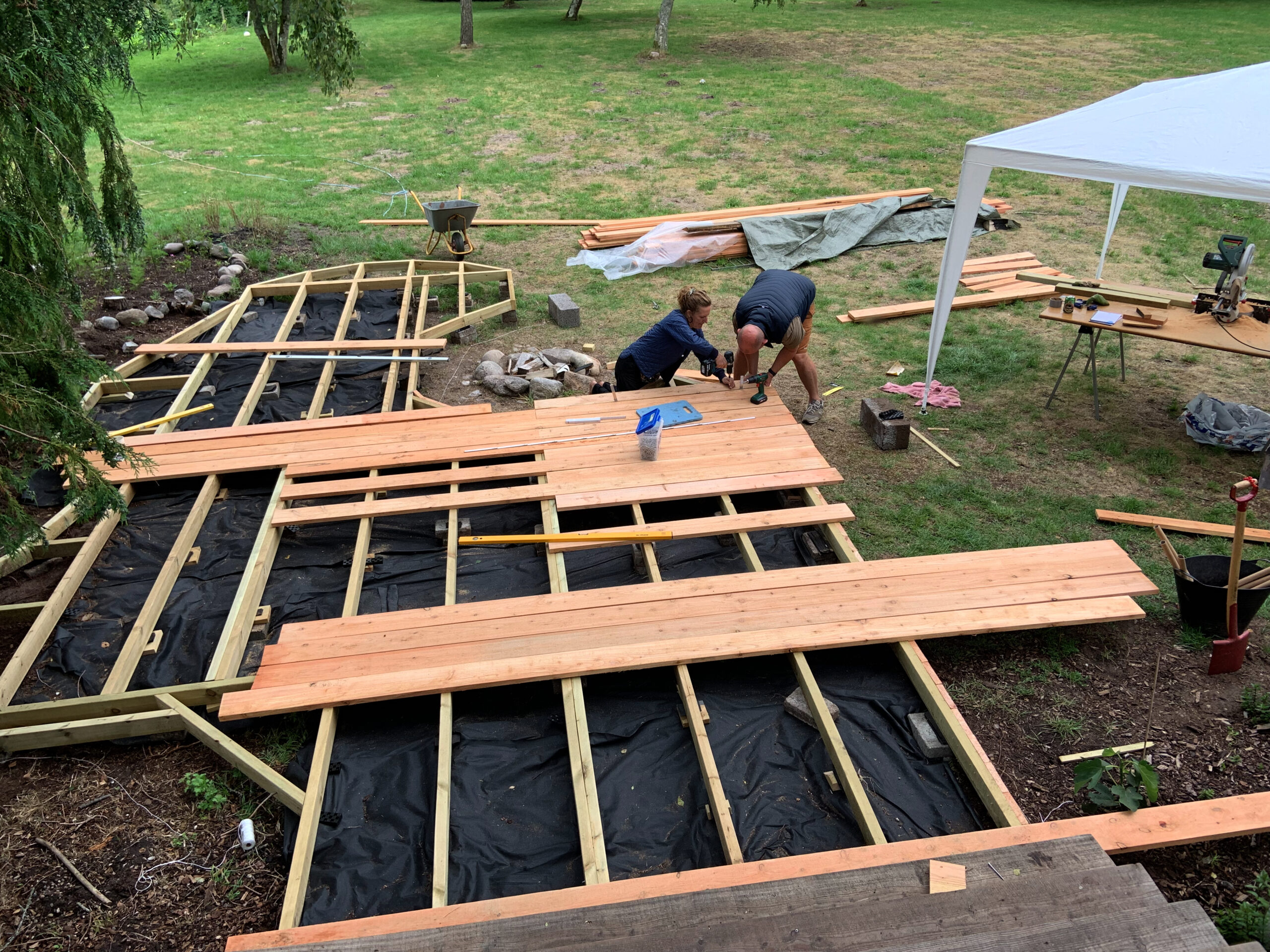
Every summer, for example, I spend a week with a group of old friends at the home of one friend who lives in a huge house. Over the years, we have built a terrace and a shed and painted the entire house. We use our bodies, solve problems and learn things along the way. We eat and drink well, have fun together, and by the end of the week something exists that wasn’t there before.
I love those weeks. Perhaps precisely because the work is so contained and intentional. We more or less know what we are doing, we give ourselves to it, and we can watch something take shape between our hands.
This year, in much the same way, I spent a few weeks of the summer finally getting started on the book I have wanted to write for a long time. Here too, the work was planned and contained, and I had consciously chosen to spend my energy on it. Perhaps this is how I have gradually come to understand the good summer state: as the opportunity to give yourself wholeheartedly to something you have chosen, rather than as busyness or productivity for productivity’s sake.
Summer – and DesignWISE
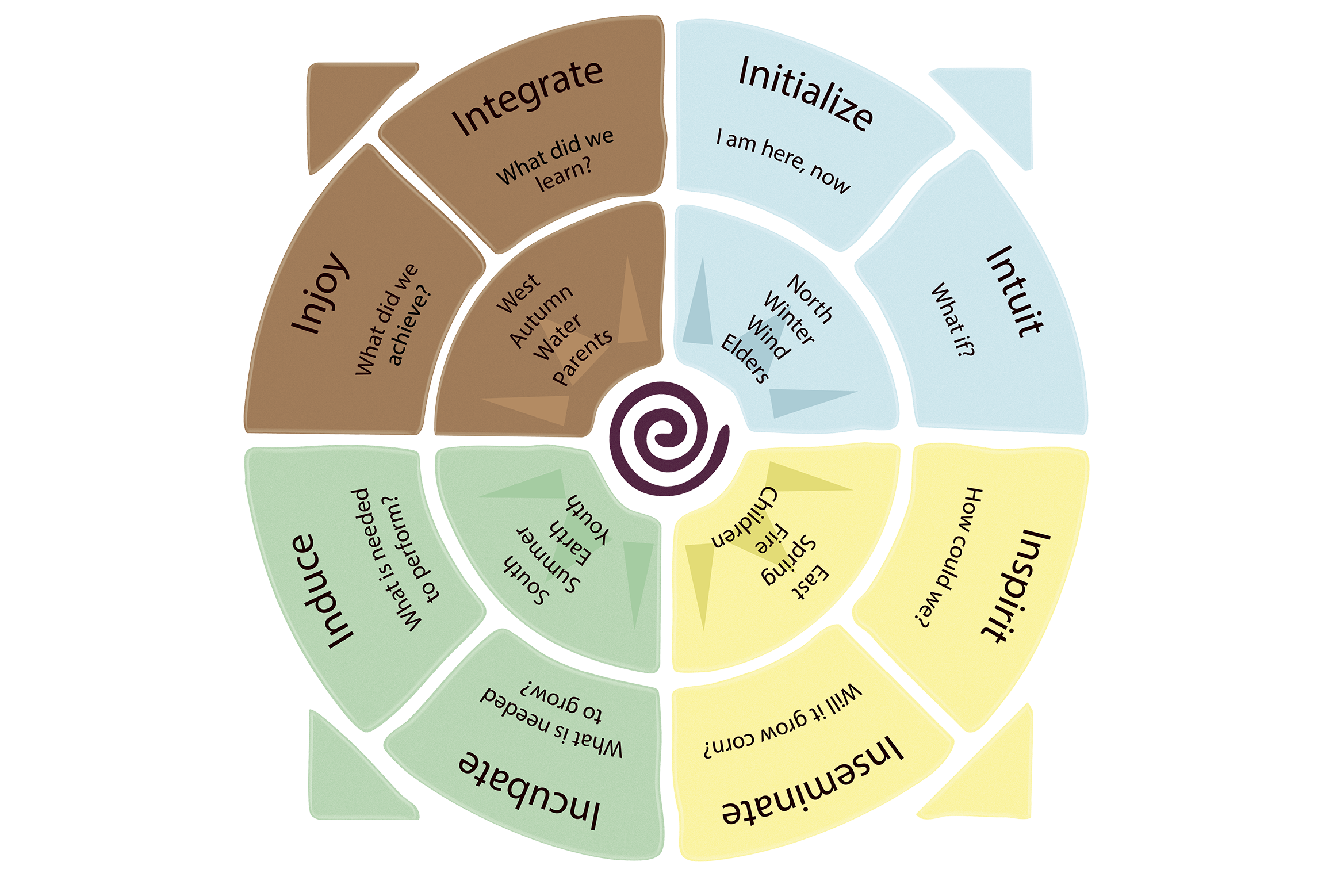
The summer meditation is part of four seasonal meditations that all grow from the same basic idea: that, like nature, we move in cycles, and that our energy, creativity and ways of acting change along the way.
This is also a central premise of DesignWISE, where the changing seasons are used as a language for human states, creative processes and change. Not as a romanticisation of nature, but as a reminder that we ourselves are nature – and therefore cannot be expected to remain in the same state all the time.
Winter creates space to withdraw. Spring to explore and choose a direction. Summer to give that direction our energy. And autumn to harvest and carry our experiences forward.
These are not four separate states to master one by one, but a movement we can learn to recognise within ourselves.
Because perhaps, in the end, it is less about getting better at holding on to the right state – and more about sensing when it is time to shift.
Other meditations:
Spring Meditation – all that wants to grow
A guided visualization to awaken curiosity, find direction, and reconnect with all the potential already living within you – inspired by the energy of spring.
Spring Meditation – all that wants to grow
Winter Meditation – When the World Calls for Stillness
A guided visualization to turn inward, find calm, and make space for new beginnings – inspired by the wisdom of winter.
Winter Meditation – When the World Calls for Stillness
Autumn Meditation – On Harvesting, Letting Go, and Finding Calm
A guided meditation to slow down, find calm, and reconnect with your inner rhythm – like the quiet wisdom of autumn itself.
Autumn Meditation – On Harvesting, Letting Go, and Finding Calm
DesignWISE — Introduction Meditation
Experience the DesignWISE introduction meditation — a 13-minute guided journey to realign your inner compass and explore your next step.
DesignWISE — Introduction Meditation


